

Training guide
The long run: the base of endurance
The long run is the week's longest session. It gets your body used to time on the move, builds endurance and is where you practise fuel and kit for the race.
Updated
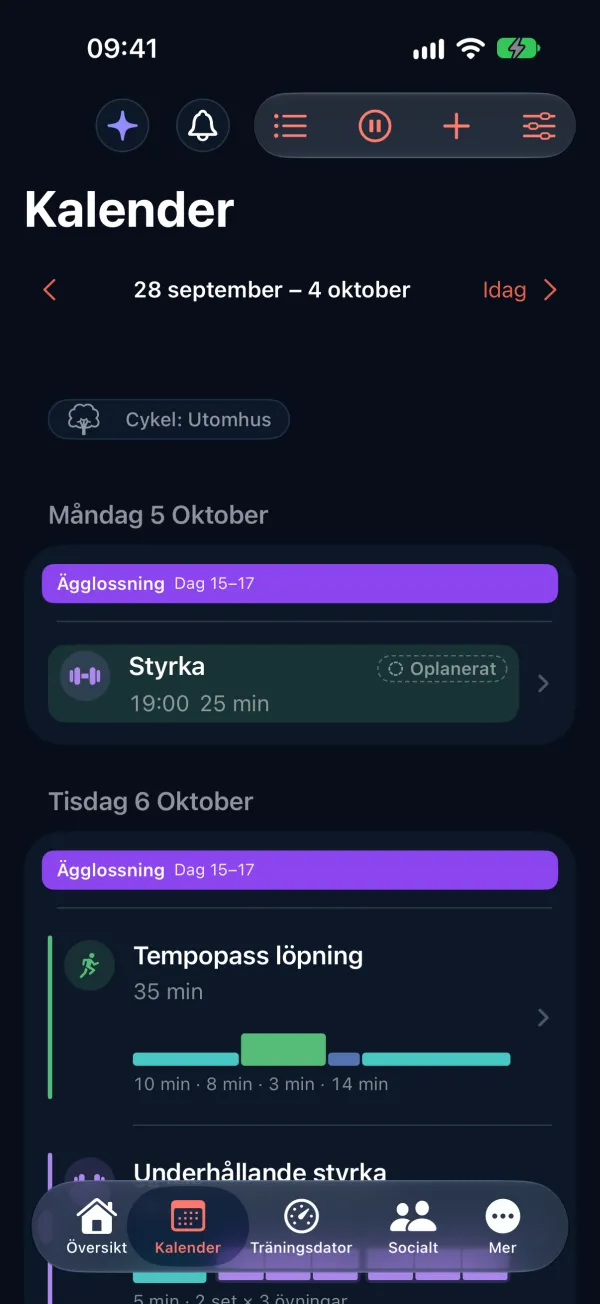
At what pace?
Most long runs should be easy, at a pace where you can talk. It is the time, not the speed, that builds endurance. As the race gets close, part of the long run can be at race pace, so your body gets used to the speed on tired legs.
How should it grow?
- Step by step: the long run gets longer over the weeks, not in big jumps.
- With lighter weeks in between, when the long run is shorter and your body has time to recover.
- By distance: before a marathon the long runs are longer than before a 10K.
Practise the race
- Eat and drink as you plan to in the race, so your stomach gets used to it.
- Run or ride in the shoes and clothes you will wear.
- Learn how the pace feels when you are tired.
What TriQuest does
- You choose the day for the long run, and the plan puts it there.
- The long run grows step by step toward the race and fits the time you have that day.
- For triathlon the long rides and runs grow separately. You practise fuel with race nutrition.
Common questions
Common questions about the long run
Do I have to run the full marathon distance before the race?
No. The long runs build your endurance without you running the full distance before the race.
What if the long run day doesn't work one week?
Move the session to another day or shorten it. The plan takes it into account.
More about TriQuest

Training guides
Heart rate zones, tests, long runs, tapering and race fuelling.

Brick workouts
Running straight off the bike, so the race's transition feels familiar.

CSS swim test
400 and 200 metres give your critical swim speed.

FTP test on the bike
A 20-minute test gives the power you train by.
Ready to train smarter?
Let TriQuest bring the plan, the workouts, the analysis and the coaching together in one place.