

Race nutrition
Race nutrition: plan your fuelling for race day
How much should you eat and drink during the race, and when? In TriQuest you build a carbohydrate, fluid and sodium plan, practise it in training and follow it in the app on race day.
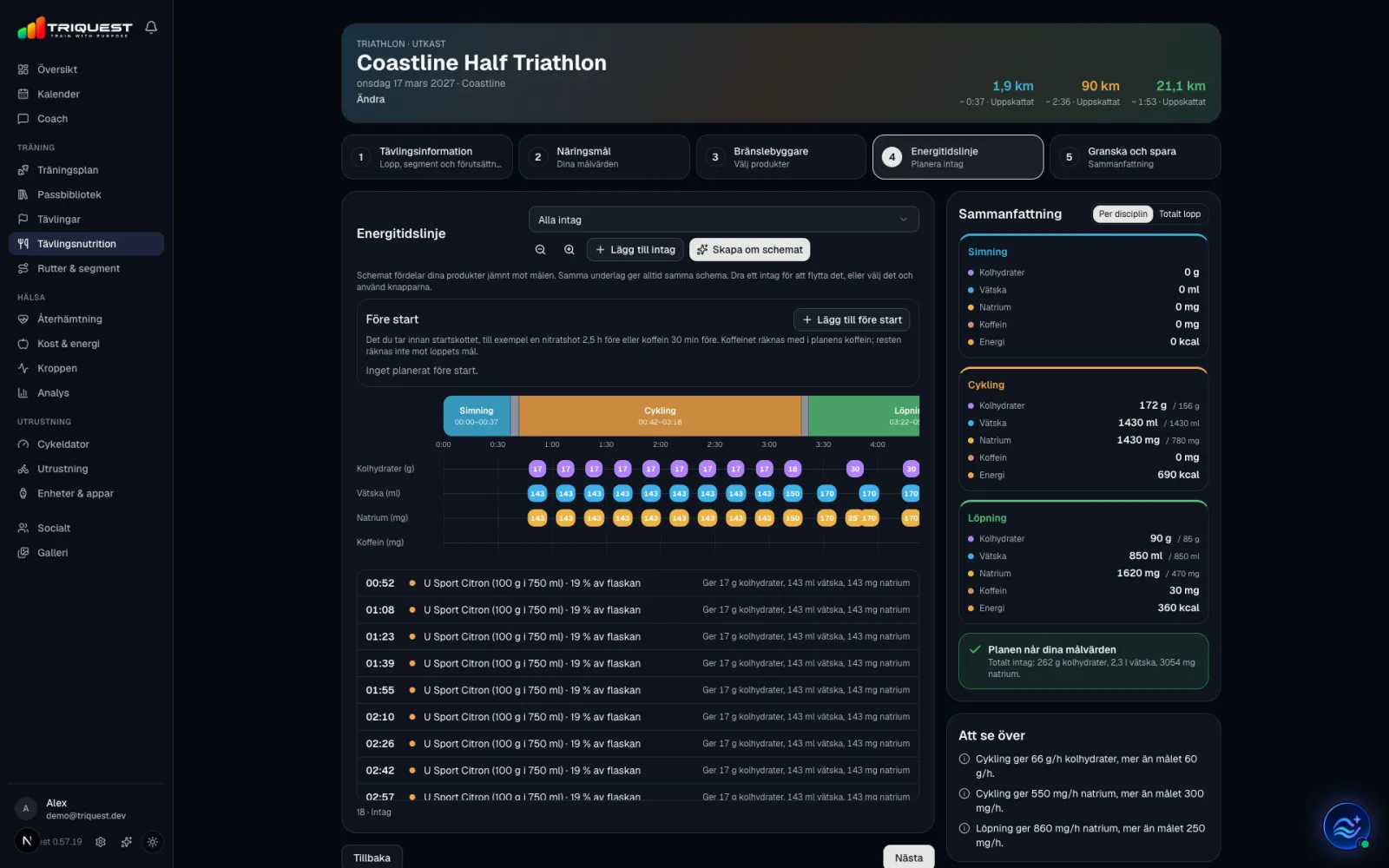
How it works
You start from your race. If it is a race goal in TriQuest, the distance, date and goal time are already there; otherwise you type them in. Then you go through five steps: the race, the targets, the products, the schedule and a final review. The plan is saved in versions, so you can try something new and go back.
A race is parts in order: swim, transitions, bike and run in a triathlon, a single run in a marathon, or running and aid stations in an ultra. Each part gets its own targets.
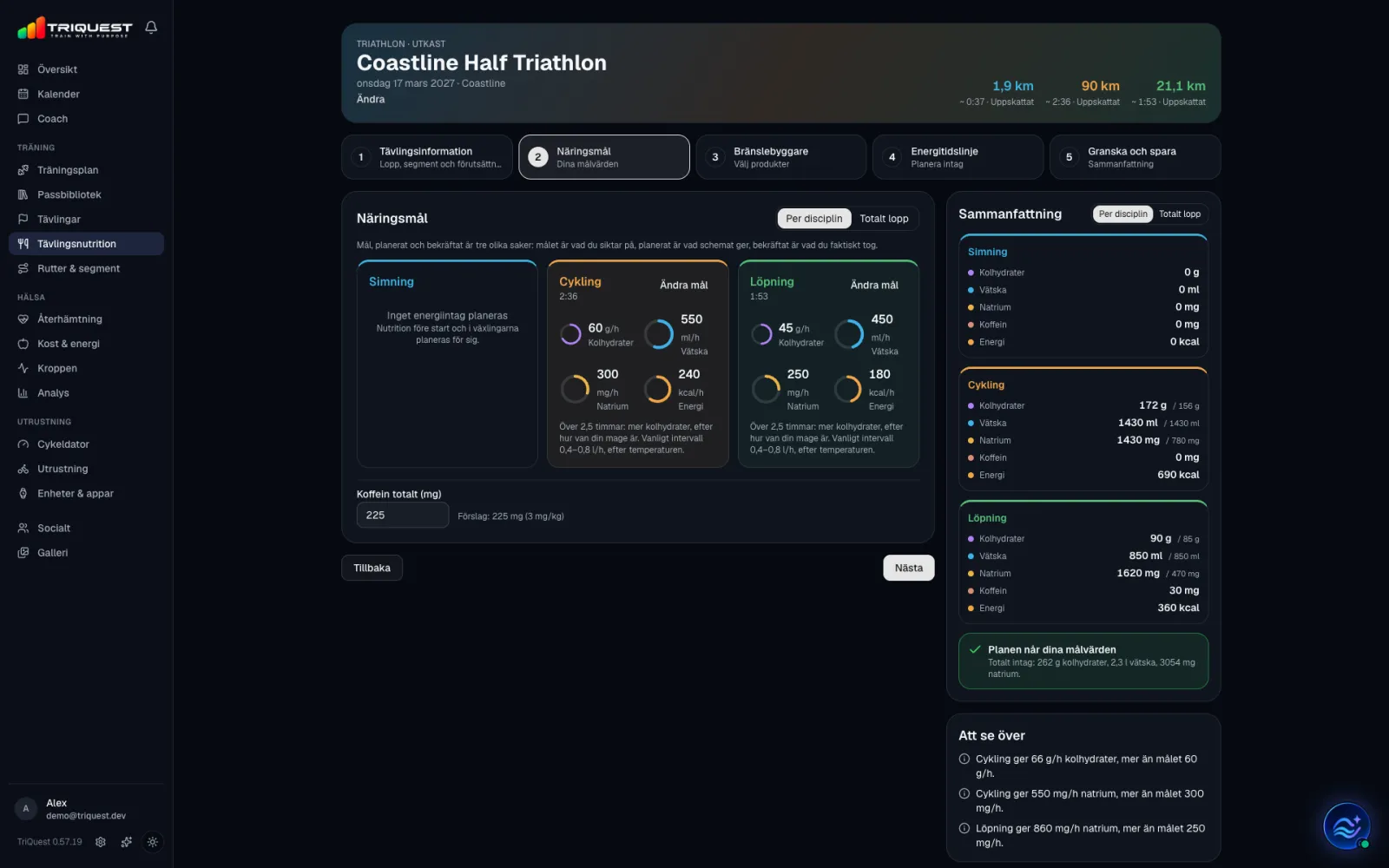
Targets for each part of the race
- Carbohydrate by how long the race lasts, your experience and how much your gut can take. A short race needs little or none, a long one more. The target never goes beyond what you have trained your gut for.
- Fluid by your sweat rate if you know it, otherwise an estimate that accounts for the heat. The plan warns you if you drink more than you sweat.
- Sodium by your sweat sodium if you know it, otherwise an estimate from the fluid.
- Caffeine only if you want it, with a suggestion by your weight and a warning for too much.
- Every number shows its source: measured, your own value, estimated or default. The numbers follow published sports nutrition guidelines, and you can change every target.
Your products
- Choose gels, drinks, bars, chews and salt capsules. Suggestions from Umara are ready to use, with the values from their product pages.
- Add your own products from the package. Salt is converted to sodium.
- Mix powder, tablets and gel in a bottle and use it as one product.
- Say where each product is: carried from the start, in the transition bag, at an aid station or as a backup, and how many you have.
- The plan keeps a product's values from when you added it, so a changed product never changes a saved plan.
A schedule you control
- TriQuest suggests a schedule from your products: sips from the bottle at regular intervals, gels and bars where the carbohydrate is needed, caffeine late in the race and a last intake before the transition.
- Drag an intake to move it, change the amount or add your own. Your changes stay when you recalculate.
- Change the times of the race's parts and the intakes move with them.
- What you take before the start, such as a beetroot shot or caffeine, is planned on its own.
- Warnings when the plan misses its targets or goes over them, too much caffeine, a bottle in the wrong part of the race or too little to carry.
- What your products can't cover is shown as a shortfall. TriQuest never makes anything up.
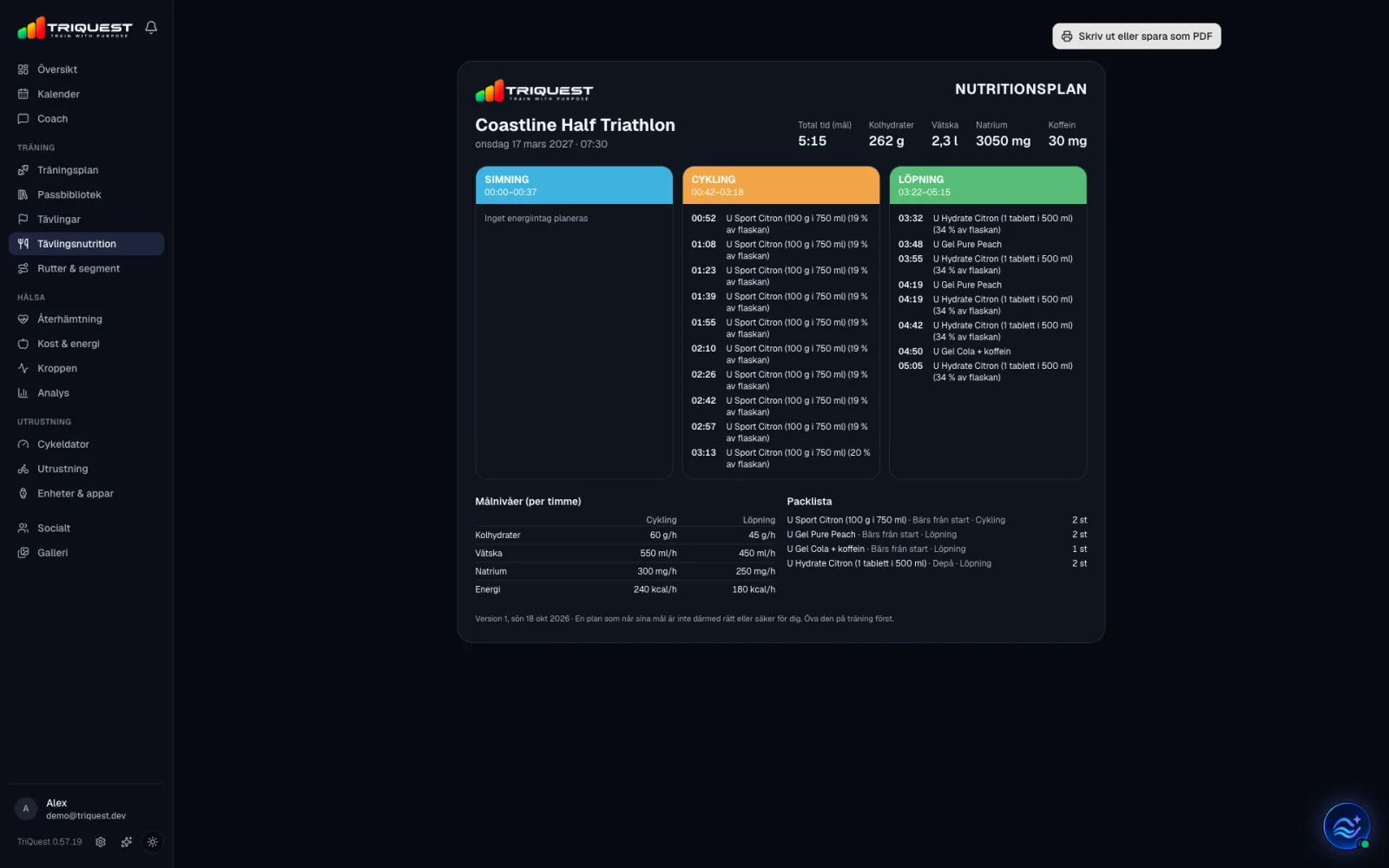
The nutrition card and packing list
- A nutrition card with every intake on the race clock, to print or save as a PDF.
- A packing list that works out how many of each you need and where they go. Tick them off as you pack.
Practise in training
- Long bike and run sessions get a practice plan with the same targets.
- Record what you took in, how your gut felt and how much energy you had.
- Coach sees what you recorded when it reads your plan before the race.
Race day in the app
- Race day mode on iPhone and Android shows the race clock, the next intake and a countdown, full screen with the screen kept on.
- Confirm, postpone or skip. Reminders arrive if you allow them.
- Rings show what you have taken in against the target so far in the race.
- Works offline, and sends what you marked when the phone is back online.
Coach and you
- TriQuest Coach reads the plan and proposes changes, which you approve.
- This is training advice, not medical advice. A plan that meets its targets is not thereby right for you: always try the plan in training before the race.
More about TriQuest

Triathlon
Plans from sprint to full distance, with bricks, a taper and race nutrition.

Running
Plans from 5 km to the marathon, with pace and heart-rate zones.
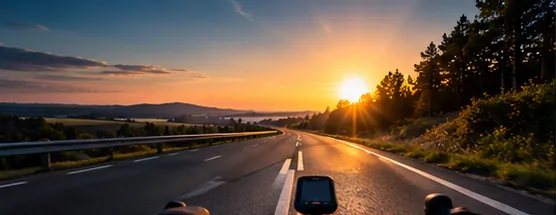
Cycling
Plans for bike races, a training computer, routes and power intervals.
Cross-country skiing
Plans for ski races, on snow or roller skis by the season.
Vasaloppet
90 km from Sälen to Mora: long sessions, double poling and roller skis to snow.
Vätternrundan
315 km around Lake Vättern: long rides that grow, the trainer in winter and fuel all the way.
Bike computer
Build your own screens for every bike, on your phone.
Ready to train smarter?
Let TriQuest bring your plan, sessions, analysis and coaching together in one place.